Penile Implant Surgery Pattaya | Real Results for Severe ED
The definitive solution for severe ED. Safe, reliable, and life-changing. Check expert reviews and competitive prices in Pattaya, Thailand.
What is a Penile Implant?
A Penile Implant (or Penile Prosthesis) is a medical device surgically placed inside the penis to help men with severe Erectile Dysfunction (ED) achieve a firm erection for sexual intercourse. Widely regarded as the gold standard treatment when oral medications, injections, or other therapies are no longer effective, a penile implant offers a permanent and dependable solution that restores both spontaneity and sexual confidence.
Clinical Mechanism
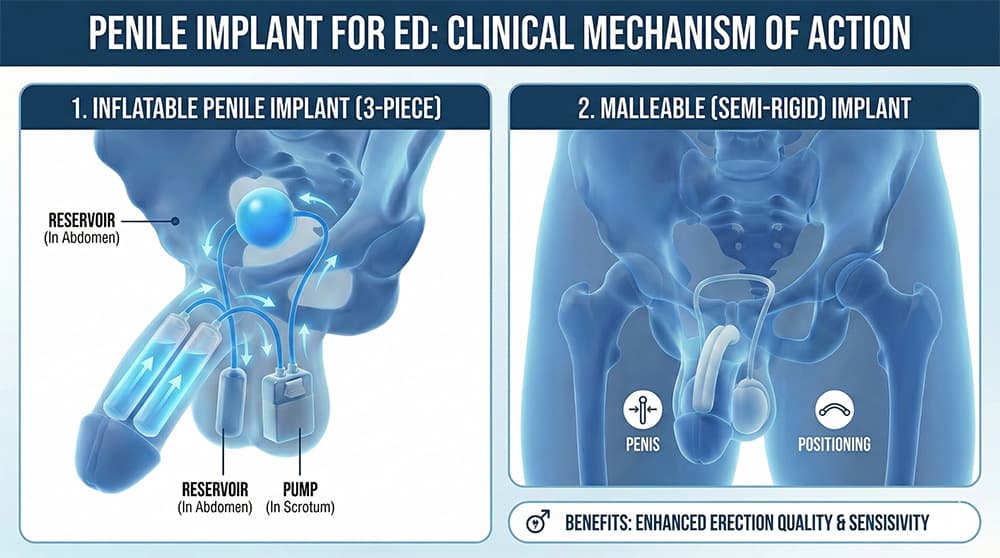
The Clinical Mechanism of Action:
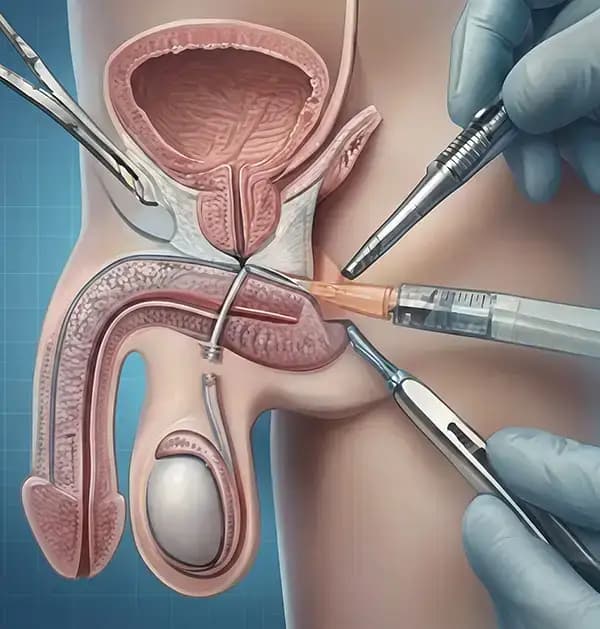
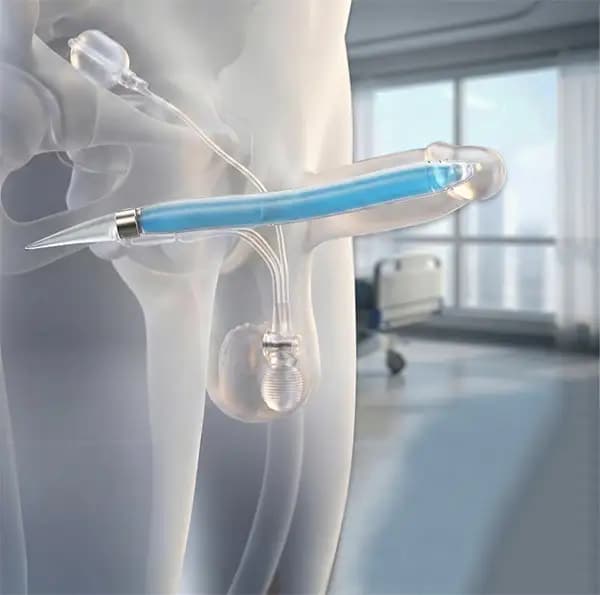
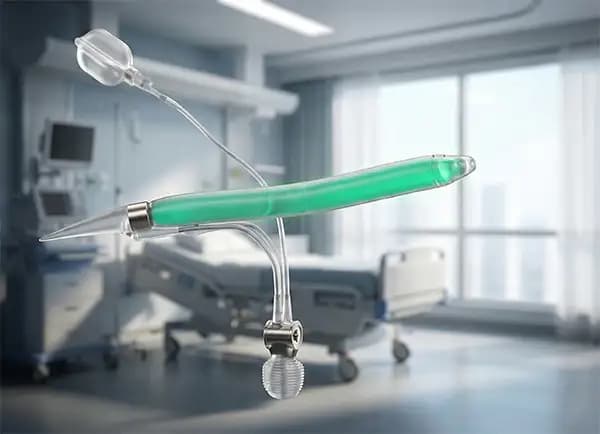
1. Inflatable Penile Implant (3-Piece): This is the most popular option and closely mimics a natural erection. It consists of fluid-filled cylinders in the penis, a small pump in the scrotum, and a reservoir in the lower abdomen. Squeezing the pump transfers saline into the cylinders, producing a firm erection. A release valve allows the fluid to drain back, returning the penis to a soft, natural state.
2. Malleable (Semi-Rigid) Implant: This device uses two flexible rods placed inside the penile shaft. The penis stays in a semi-rigid state and can be manually positioned — angled downward for daily comfort or upward for sexual activity. It's simpler and involves fewer mechanical components.
Why It Works: Unlike medications that depend on blood flow, penile implants provide mechanical support, enabling a reliable erection virtually every time — regardless of underlying vascular or nerve conditions.
Treatment Procedure
Anesthesia
General or spinal anesthesia. Small incision made (scrotal or infrapubic).
Implantation
Cylinders placed in penile shaft, pump in scrotum, reservoir in abdomen.
Testing
Device tested intraoperatively to ensure proper function.
Recovery
Overnight stay. Activate device after 4-6 weeks of healing.
Safety & Complications
Modern penile implants have complication rates below 5%. Potential risks include infection (1-3%), mechanical issues (uncommon with current-generation devices), and erosion (very rare). Choosing an experienced urological surgeon with a high case volume significantly improves outcomes and reduces risk.
Suitable Candidates
- Men with severe ED who have not responded to medications, injections, or shockwave therapy.
- Patients with nerve damage after prostate surgery or other pelvic procedures.
- Those who want a reliable, on-demand solution without daily medication.
- Men looking for a long-term, one-time surgical solution to erectile dysfunction.
Types of Penile Implants
Inflatable vs. Malleable Devices
| Feature | 3-Piece Inflatable | Malleable (Semi-Rigid) |
|---|---|---|
Natural Appearance | Fully flaccid when deflated | Always semi-rigid |
Rigidity Control | Pump to inflate/deflate on demand | Bend up/down manually |
Partner Satisfaction | Highest (feels most natural) | Good (less natural feel) |
Complexity | More components (pump, reservoir) | Simpler (2 rods only) |
Recovery & Activation
Healing
Initial healing of incisions. Manageable discomfort with medication.
Activation
First in-office training session to learn how to operate the device.
Full Confidence
Complete comfort using the device. Spontaneity restored.
Frequently Asked Questions
QWill it look and feel natural?
Yes. When deflated, a 3-piece inflatable implant is virtually undetectable — most partners cannot tell the difference from a natural erection.
QWill I still be able to orgasm and ejaculate normally?
Yes. The implant only restores firmness. Sensation, orgasm, and ejaculation remain completely unaffected.
QHow long does a penile implant last?
Current-generation implants are designed to last 15 to 20 years. If needed, the device can be replaced with a straightforward revision surgery.
Ready to Start?
Consult with our Board-certified specialists at M-Trust Urology for Penile Implant Surgery Pattaya | Real Results for Severe ED.